My Favorite Books of 2025 and What I Plan to Read in 2026

I’m not sure how many books I read in 2025, but it felt like a lot. Below I’ve collected a few standouts. This list reflects my intellectual preoccupations: democratic socialism and social democracy, labor history, Yiddish and Yiddishkeit, and realism in art and literature.

Tomorrow’s Bread by Beatrice Bisno

Published in the 1930s, this proletarian novel is based on the life of the author’s father, Abraham Bisno, a Jewish immigrant to Chicago from Ukraine who became a prominent labor leader among the city’s garment workers. A consummate organic intellectual, Bisno was a militant strike leader and practical socialist with provocative bohemian proclivities. The novel narrates Bisno’s personal and family life and paints an evocative picture of Jewish immigrant life in Chicago at the turn of the 20th century, a subject I wrote about recently for the Newberry Library.

The Communist by Guido Morselli

I was blown away by this intensely philosophical and psychological portrait of the Italian Communist Party in the 1950s. Although it is a novel, the story is grounded in a real milieu and mixes factual people and events with fictional in a way that I found compelling and stimulating. I especially liked its reflections on the fate of labor in a socialist society, a seemingly abstruse topic on which the plot actually hinges.

Your Comrade, Avreml Broide: A Worker’s Life Story by Ben Gold, translated by Annie Sommer Kaufman

Originally serialized in the leftwing Yiddish newspaper Morgn Frayhayt, this short novel tells the story of Avreml, a Jewish immigrant to New York from a shtetl in Romania. The novel is divided into two parts: the first is a lively description of life in the old country, peppered with romance, duplicity, underworld thieves, and a knock-down, drag-out fight. When events drive Avreml to leave for the United States, he finds himself alone and alienated by his new surroundings, an exploited worker in the garment industry. Avreml discovers socialism and eventually joins the Communists, making great personal sacrifices for the movement. While I found the second half of the novel didactic and dogmatic—it would be interesting to contrast it with the novel mentioned above, which takes a much more skeptical perspective on communist politics—the first half was utterly enchanting, enlivened by artist William Gropper’s inimitable illustrations. Kaufman’s translation is so seamless that you hardly realize you’re not reading the original, and her introduction places the novel in social and historical context.

New Deal Art by John P. Murphy

Written by my good friend and former Northwestern comrade, this handsomely illustrated survey is art history at its best. It offers a social, cultural, and institutional account of the era’s major artists and artworks, highlighting the diversity of New Deal artists while prompting the reader to consider the implications of the New Deal’s experiment in cultural democracy for today. I posted a short review of it on Amazon.

Salud y Shalom: Conversations with Jewish Veterans of the Abraham Lincoln Brigade by Joseph Butwin

A work of oral history, this book offers an unparalleled look at the personal and cultural factors that motivated American Jews to travel to Spain in the late 1930s and fight on behalf of the Spanish Republic against a fascist rebellion supported by Nazi Germany and fascist Italy. As these conversations reveal, Jewish volunteers—who made up around a third of those who joined the Republican cause from abroad—often came from families steeped in left-wing Yiddish culture. In other words, they had yikhes. Butwin conducted his interviews in the 1990s, when the veterans were still alive, and his book is notable among recent publications on the Spanish Civil War for containing so much first-hand testimony from the war’s participants, which it is no longer possible to gather. I hosted a book talk with the author for the Chicago YIVO Society in November.

Nordic Socialism by Pelle Dragsted

Drawing on the experience of the Nordic economies—where strong labor unions, state-owned enterprises, social democratic welfare states, and cooperative enterprises shape much economic activity—Pelle Dragsted, who represents the Red-Green Alliance in the Danish parliament, argues that it is possible to build a socialist society that avoids the pitfalls of the failed state socialisms of the twentieth century while still delivering a broad democratization of the economy. He envisions a pluralism of communal ownership forms that give ordinary people control over their lives while ensuring a high standard of living that is ecologically sustainable. I read Dragsted’s book alongside several other books about Nordic economic systems, including Viking Economics by George Lakey, Economic Performance in the Nordic World by Torben M. Andersen, and The Rise and Fall of Swedish Social Democracy by Kjell Östberg. One goal I have for 2026 is to write a review that addresses all these books together.

While Messiah Tarried by Nora Levin

I’m not sure why this book isn’t better known (although maybe I’m betraying my own ignorance). As a history of Jewish socialist movements, it covers much of the same territory as World of Our Fathers by Irving Howe and Prophecy and Politics by Jonathan Frankel, both of which are better known. What I liked about Levin’s book, which I finished in the waning hours of 2025, is its synoptic quality. Where Howe focuses on Jewish immigration to the United States and Frankel looks at Jewish socialism and nationalism in Eastern Europe, Levin brings these different strands together. She begins in the Russian Pale of Settlement, describing the conditions faced by Eastern European Jews, and covers Jewish immigrant socialist and labor movements in London and the U.S., the Bund in the Russian Empire, and the rise of socialist Zionism, ending with a chapter on Jewish-Arab relations in Palestine before the Balfour Declaration, a timely note on which to conclude.
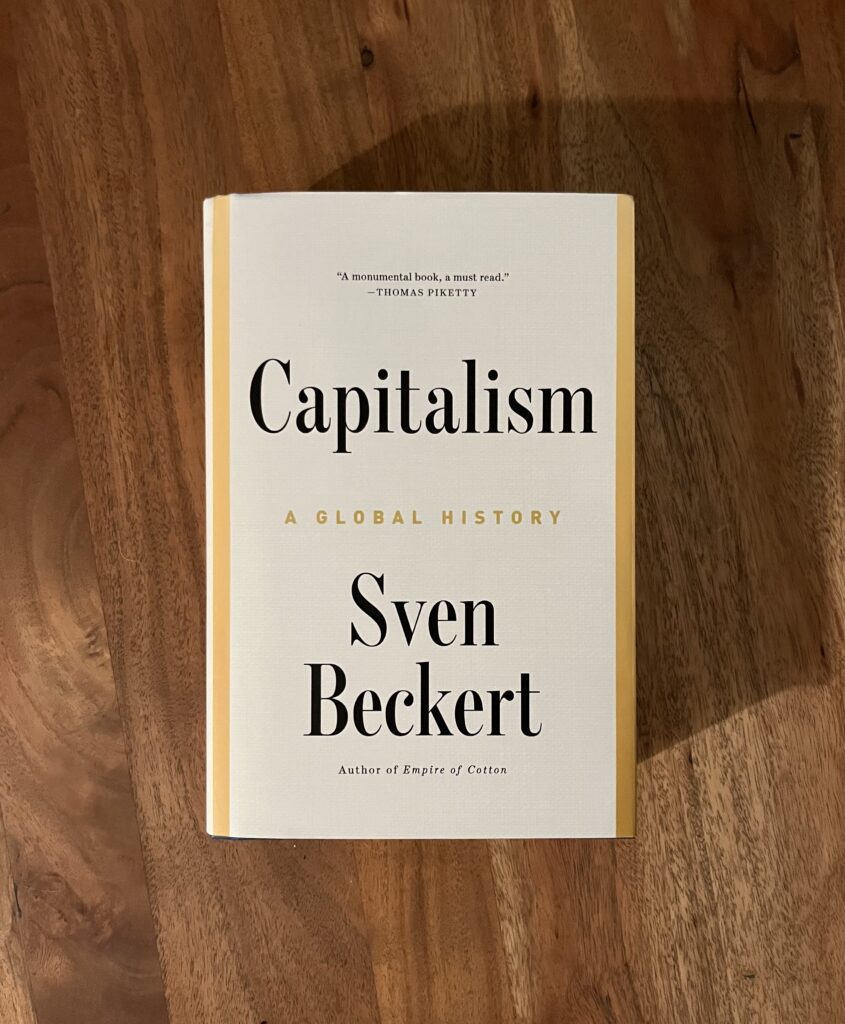
I’m kicking off 2026 by diving into Sven Beckert’s new history of capitalism. I admired his earlier book, Empire of Cotton, and am looking forward to this one. At more than 1,000 pages, I think it should count as at least two books when it is time to tally the year’s reading at the end of 2026. A couple of other books I look forward to reading are Citizens of the Whole World: Anti-Zionism and the Cultures of the American Jewish Left by Benjamin Balthasar and Embracing Exile: The Case for Jewish Diaspora by David Kraemer.

Happy New Year, and happy reading!
The Case for Nordic Social Democracy, According to the New York Times

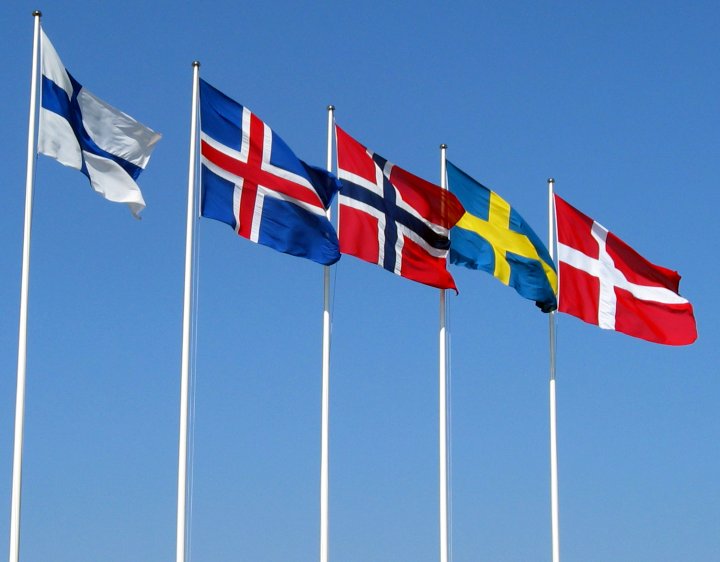
Several months ago, I posted a review of George Lakey’s 2017 book, Viking Economics. While overall I liked Lakey’s accessible exposition of the social democratic policies prevalent in countries like Norway, Sweden, Finland, and Denmark, I did raise a few quibbles. One of my criticisms was that Lakey could have explained more clearly how the Nordics rely on the welfare state to prevent poverty by providing income support to people who cannot earn income through the regular labor market, such as the unemployed. A recent article in The New York Times offers a dramatic illustration of this point while demonstrating the broader virtues of social democratic welfare states as promoters of dignity, independence, and personal freedom.

Before turning to the article, it might be useful to review some key concepts. According to policy analyst Matt Bruenig, whom I cited in my review of Lakey, there are six types of people who typically cannot earn “factor income” via the market: children, students, the elderly, the disabled, caretakers, and the unemployed. Unless they own assets that allow them to collect rent or capital income, people who fall into one of the above categories cannot earn income via the market because their situation precludes paid work. The point is especially clear in the case of the unemployed, whose jobs have literally been taken from them and who have thus lost the wages on which they had previously relied.

As Bruenig argues, poverty tends to afflict people in these groups because they have no way to make money. A well-designed welfare state ensures that they are not plunged into penury by providing them with income via child allowances, old-age pensions, disability benefits, and the like. In the case of the unemployed, unemployment insurance makes up for the income shock that accompanies job loss, ensuring that unemployed people can cover basic living expenses such as housing and food, as well as other financial obligations that they might have incurred while earning income from work.

Hansjorn, CC BY-SA 3.0, via Wikimedia Commons

In the Nordic countries, these benefits often replace income at a relatively high percentage of the previous wages earned while also providing resources to help people who are out of work find new opportunities and upgrade their skills via training and education. In the United States, however, unemployment insurance is often much more meager, exposing people who are unemployed to the dangers of poverty and placing them in a position of dependence and vulnerability.

Unemployment insurance in the U.S. is also administered at the state level, creating a confusing patchwork of bureaucracies with different benefits and requirements. When I lost my job as a remote worker at the end of 2023, for example, it was hard to determine if I should apply for benefits in the state where I lived or the state where my employer was located. Each state told me to contact the other. In the end, I didn’t get any unemployment benefits despite losing the job through no fault of my own. Fortunately, I could rely on savings, income from my wife who was still employed, and my supportive family. Overdue bills, missed rent or mortgage payments, lack of food, and homelessness were never real risks. Not everyone is so lucky.

The mental and financial stress of joblessness is the subject of The New York Times article mentioned above, which shows that such stresses derive from choices in government policy, not immutable laws of nature. The article follows two women—one American and one Swedish—who both lost jobs in automobile plants. Melinda Minor, who worked at a General Motors plant in Lordstown, Ohio that relocated to Mexico, struggled to meet health and education expenses after she lost her employer-provided health insurance and had to pay for her son’s public university education on a diminished income. Although she was able to take advantage of a government-sponsored retraining program, her new job installing HVAC systems paid significantly less than her auto industry job. Eventually, Minor got a new auto industry job that pays more than her old GM job because the plant is organized by the UAW. Despite this stroke of good fortune, however, she is still scarred by her experience of joblessness.

Josefine Soderberg was equally shocked when the Swedish plant she worked at manufacturing batteries for electric vehicles announced that it would be shutting down, but the fallout was not nearly so traumatic. For one thing, as alluded to above, Sweden offers more generous unemployment insurance that replaces lost income at a higher rate. According to the NYT, “an American family of four—two parents and two children—typically receives unemployment benefits amounting to 36 percent of the family’s previous income” six months after losing a job. A comparable Swedish family, by contrast “would gain benefits that are almost double the American share—70 percent of its previous income.”

Cushioned by more generous benefits and assigned a job coach who helped her navigate her options and encouraged her to take her time in finding a new line of work, Soderberg remade herself as a small-business owner creating and selling art. She was able to get a six-month extension of her unemployment benefits and enrolled in a small-business training program that taught her the skills she needed to strike out on her own.

As the article notes, more generous unemployment insurance is not the only difference between the Swedish and American systems. Where Minor had to grapple with health expenses and the formidable American healthcare bureaucracy after losing her employer-sponsored health insurance plan, Soderberg was never in such a position because Sweden has a national health insurance system. Access to universal benefits independent of employment status gave Soderberg more room to breathe and maneuver—ultimately, it allowed her a greater degree of freedom to pursue her own path. As she explained to the Times: “If we didn’t have free health care, I couldn’t have done this. I don’t have to be scared of getting sick or something, because I can count on the system.”

While conservatives and proponents of laissez faire economic policies would have you believe that a robust welfare state encourages dependence and threatens to place us on the “road to serfdom,” to invoke the title of libertarian economist F.A. Hayek’s famous anti-social democratic polemic, the contrasting cases of Minor and Soderberg show the opposite: The welfare state, when properly designed, can be a bulwark against dependence on employers, overweening family members, or charitable institutions, whose non-standardized assistance in times of personal economic crisis often comes with significant strings attached. As Soderberg’s case shows, the social democratic welfare state provides people with the freedom they need to pursue their own version of happiness. For this reason, we might see it as peculiarly American. As the sociologist John Bellamy Foster asked rhetorically in a 2016 Washington Post op-ed: “Is democratic socialism the American dream?”

Enabling more personal security and freedom are not the only potentially salutary effects of embracing strong welfare states. As the framing of the Times article shows, a strong welfare state can help cushion the blows of a globalized economy, in which job loss results from international competition and the relocation of production to other countries. The economic devastation wrought by such forces can lead to populist backlashes that draw people to extreme, reactionary ideas—toxic forms of nationalism that blame problems on immigrants and conniving foreign powers. Promoting social democratic policies could thus function as an alternative to the hyper-nationalist, trade war-style policies pursued by both American political parties, but especially by the GOP under Donald Trump.

None of this is to say that the Nordic social democracies are without their own problems, including rightwing populism and xenophobia. Some even question whether it makes sense to call them proper social democracies anymore. As the Swedish historian Kjell Östberg shows in his recent book The Rise and Fall of Swedish Social Democracy, Swedish social democratic ambitions have been significantly chastened since their heyday in the 1970s, when strong social movements pushed for major reforms. The rise of neoliberalism in the 1980s and 90s has led to rollbacks and privatizations, especially in the realms of education and housing. Despite these setbacks, however, the successes of the Nordic social democracies can still point the way toward a more thoroughgoing democratic socialism, as Danish MP Pelle Dragsted argues in his recent work, Nordic Socialism. I hope to discuss both books in a future post.